
"coffee yield per tree"
900 article(s) found
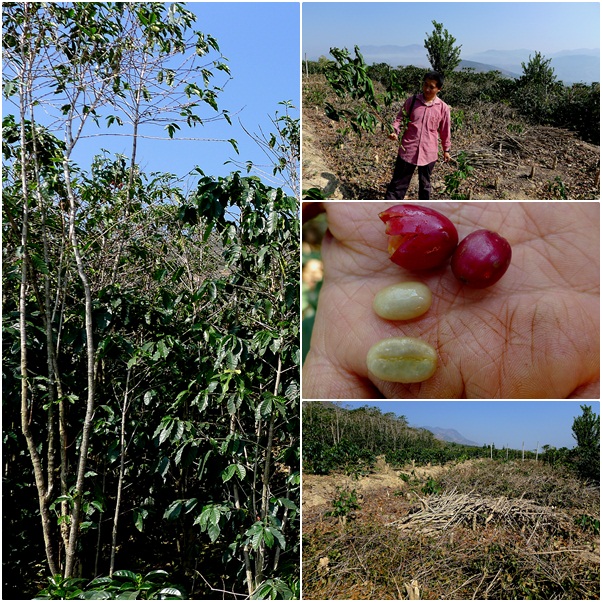
Yunnan Coffee Yunnan Bean varieties the old variety Tieka and the new variety Katimo
Yunnan Coffee Root-seeking Journey the old variety Tieka new variety Katimo mentioned Yunnan coffee. Perhaps the word we hear most is Yunnan small-grain coffee, and most of them will say that Yunnan small-grain coffee is fragrant but not bitter, strong but not strong, so many people classify Yunnan coffee varieties as small-grain species, and the taste evaluation of Yunnan coffee is naturally fragrant rather than bitter, strong but not strong.

The riddle of "Laos Coffee ranking in the World" _ Laos Coffee Arabica Coffee beans how much is one
Professional coffee knowledge exchange more coffee bean information please follow the coffee workshop (Wechat official account cafe_style) Laos coffee beans are completely 100% Arabica beans, the higher the content of this coffee beans, the better the taste rumors: Laos coffee beans are the world's third largest coffee beans, mainly exported to France! Coffee is Laos's fifth largest export. Poirot in the south

Kenya SL28 34 hand temperature? Historical Story of K7BatianRuiru characteristics of Kenyan Coffee varieties
Qianjie has recommended Asaria coffee beans from Kenya more than once. I believe you are already very familiar with the cooking details of this coffee bean. Filter cup: V60 filter cup water temperature: 90-92C powder quantity: 15g powder-to-water ratio: 1:15 grind: medium and fine grinding (Chinese standard 20 sieve pass rate 80%) flushing and cooking method: staged extraction with 30 grams of water for steaming, stuffy
Varieties of Yunnan Fine Coffee beans Classification of Yunnan Fine Coffee quality of Yunnan Coffee
When it comes to Yunnan coffee, perhaps the most common word we hear is Yunnan small-grain coffee, and most of them will say that Yunnan small-grain coffee is fragrant but not bitter, strong but not strong, so many people classify the varieties of Yunnan coffee as small-grain species. naturally, the taste of Yunnan coffee is fragrant but not bitter, strong but not strong. Regardless of whether it is correct or not, if we explore it strictly, there is a name at present.

What are the varieties of Yunnan boutique coffee beans? are Yunnan coffee beans Arabica beans?
Professional coffee knowledge exchange more coffee bean information please follow the coffee workshop (Wechat official account cafe_style) Yunnan boutique coffee root search trip old variety iron card new variety Katimo mentioned Yunnan boutique coffee, maybe the most common word we hear is Yunnan small grain coffee, and most of them will say that Yunnan small grain coffee is fragrant but not bitter, strong but not strong, so a lot

Bogota Coffee Tour learn more about Colombian Coffee
The area of Colombia is 3 times the size of Japan's capital: Bogota language: Spanish average GDP:48 ten thousand yen per person (Japan is 4.2 million yen) Bogota, the capital of Colombia, is 2600m above sea level. As an equatorial country, coffee is produced in mountains at higher elevations. You can feel the waves more when climbing stairs in Bogota at 2600m above sea level.

Introduction to the flavor and taste of domestic iron pickup coffee and the characteristics of high-quality coffee beans in manor area
China Coffee Network so when Nestl é succeeded in promoting high-yield new varieties in Pu'er in the 1990s, brown farmers in Baoshan also cut down old varieties and changed them to new ones. With a round of coffee expansion, new varieties are increasing and old varieties are decreasing day by day. Finally, today's situation: the old varieties have almost been cut down, and the little ones that survived are all old and weak.

Introduction to the production areas of fragrant Costa Rican Coffee with the characteristics of Grinding degree
Coffee was introduced into Costa Rica from Cuba in 1729. Today, its coffee industry is one of the well-organized industries in the world, with a yield of 1700 kg per hectare. Costa Rica has only 3.5 million people but 400m coffee trees, and coffee exports account for 25 per cent of the country's total exports. The volcanic soil of Costa Rica is very fertile and well drained, especially in the central part.

Introduction to the characteristics of flavor and taste of Costa Rican coffee manor
Coffee was introduced into Costa Rica from Cuba in 1729. Today, its coffee industry is one of the well-organized industries in the world, with a yield of 1700 kg per hectare. Costa Rica has only 3.5 million people but 400m coffee trees, and coffee exports account for 25 per cent of the country's total exports. The volcanic soil of Costa Rica is very fertile and well drained, especially in the central part.

Fine Coffee introduced in the Coffee production area in the Central Mountain area of Costa Rica
Coffee was introduced into Costa Rica from Cuba in 1729. Today, its coffee industry is one of the well-organized industries in the world, with a yield of 1700 kg per hectare. Costa Rica has only 3.5 million people but 400m coffee trees, and coffee exports account for 25 per cent of the country's total exports. The volcanic soil of Costa Rica is very fertile and well drained, especially in the central part.

Yield of Antigua coffee beans in Guatemala _ how to identify authentic Antigua coffee beans in Guatemala
Professional Coffee knowledge Exchange more information on coffee beans Please follow the Coffee Workshop (official Wechat account cafe_style) Guatemala is a tiny country, but it has one of the most complex microclimates in the world. In this country, soil, rainfall, humidity, altitude and temperature behave differently in different regions, forming eight different climates in Guatemala.

Grinding scale of Diamond Mountain Coffee beans in Costa Rica introduction of manor varieties by taste treatment method
Coffee was introduced into Costa Rica from Cuba in 1729. Today, its coffee industry is one of the well-organized industries in the world, with a yield of 1700 kg per hectare. Costa Rica has only 3.5 million people but 400m coffee trees, and coffee exports account for 25 per cent of the country's total exports. The volcanic soil of Costa Rica is very fertile and well drained, especially in the central part.

A brief introduction to the Flavor description treatment of Hawaiian Coffee Bean Grinding Calibration Variety and its producing area
In 1813, a Spaniard first grew coffee in the ManoaValley Valley of Oahu, which is today the main campus of the University of Hawaii. In 1825, an English agronomist named John Wilkinson transplanted some coffee from Brazil to grow in the coffee garden of Chief Birch on the island of Oahu. Three years later, a man named Samuel Riveland Draggs (

Coffee varieties quality large seed-coffee classification varieties and characteristics
Coffee varieties quality large seed-coffee classification varieties and characteristics of young trees refers to the period from planting to production, about 2-3 years. The main characteristic of this period is vigorous vegetative growth, 6-8 pairs of branches can be drawn every year, with roots, stems and leaves growing as the center, and the above-ground and underground parts expand rapidly to form ideal plant structure and prepare for production. Primiparous period refers to the beginning of labor

Varieties of Yunnan boutique coffee beans the old variety Tieka and the new variety Katimo Yunnan boutique coffee
Yunnan Coffee Root-seeking Journey the old variety Tieka new variety Katimo mentioned Yunnan coffee. Perhaps the word we hear most is Yunnan small-grain coffee, and most of them will say that Yunnan small-grain coffee is fragrant but not bitter, strong but not strong, so many people classify Yunnan coffee varieties as small-grain species, and the taste evaluation of Yunnan coffee is naturally fragrant rather than bitter, strong but not strong.

Introduction of Coffee Flavor Manor in the Western Valley of Costa Rica
Coffee was introduced into Costa Rica from Cuba in 1729. Today, its coffee industry is one of the well-organized industries in the world, with a yield of 1700 kg per hectare. Costa Rica has only 3.5 million people but 400m coffee trees, and coffee exports account for 25 per cent of the country's total exports. The volcanic soil of Costa Rica is very fertile and well drained, especially in the central part.

Yunnan Tieka Coffee Bean processing Variety taste characteristics Grinding degree Manor production area introduction
The so-called new variety of Yunnan Tiepika boutique coffee beans actually refers to catimor (Katimo), which is a hybrid of the timor species of the Roberta family and Arabica. Compared with the old varieties, it lacks rich aroma and taste, and has a relatively shallow smell of grass and soil, but its advantages are resistance to diseases and insect pests, easy to manage, high yield, and its yield per mu can reach up to 35.

Introduction of Columbia Fine Coffee Bean Flavor and Taste Manor
The pure taste of Colombian coffee comes from Colombia's natural environment with the most favorable conditions for coffee growth. But beyond that, it is inseparable from the hard work of local growers. In Colombia, coffee cultivation has reached 1.07 million hectares, there are about 302000 coffee plantations in the country, and 30 to 40 per cent of the rural population depends directly on coffee production. Columby

Costa Rican Tarazhu Coffee Flavor description Grinding characteristics Price of High-quality Coffee beans in producing areas
Coffee was introduced into Costa Rica from Cuba in 1729. Today, its coffee industry is one of the well-organized industries in the world, with a yield of 1700 kg per hectare. Costa Rica has only 3.5 million people but 400m coffee trees, and coffee exports account for 25 per cent of the country's total exports. The volcanic soil of Costa Rica is very fertile and well drained, especially in the central part.

Is Kenya PB Coffee good? the method of making Kenyan Coffee
Professional baristas exchange please pay attention to the coffee workshop (Wechat official account cafe_style) SL28 is a delicious variety, suitable for growing in the middle and high altitude areas where leaf rust is not serious, with a yield of 1.8t raw beans per hectare and charming sour plum taste to reflect the national treasure of Kenya. Many people are familiar with the Kenyan AA, which is the most common symbol of Kenyan coffee in China. In fact, AA is Ken.